

Kitchen and Bathroom Remodels in Chappaqua: Blending Modern Comfort with Colonial Character
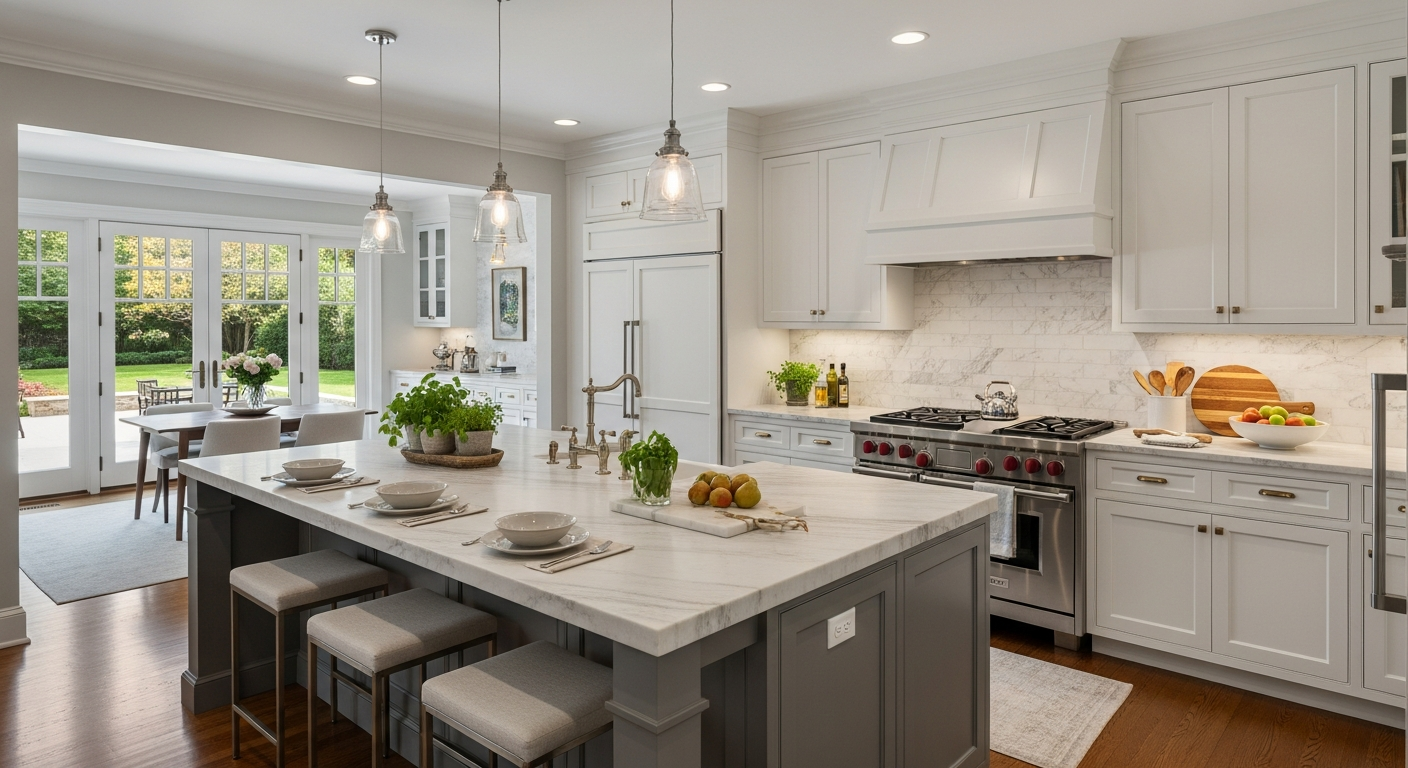
Chappaqua Kitchens: From Closed-Off to Open
Walk through most Chappaqua homes built before 1990, and you’ll find the same layout: a small, galley-style kitchen tucked behind a wall, separate from the dining room and living spaces. It worked when homeowners spent less time cooking at home. Today, it doesn’t.
Chappaqua kitchens are among the most frequently remodeled spaces in town, and for good reason. Removing the wall between kitchen and dining room (or kitchen and family room) is the single most impactful change-it makes the home feel larger, connects you with family and guests while cooking, and lets natural light flow through the space. In ranch homes and Colonials across Chappaqua, this open-concept shift is standard.
But opening the kitchen means dealing with structural realities. You might have a load-bearing wall, existing electrical that doesn’t align with your new island, plumbing under the floor, or HVAC ducts overhead. A remodeler who understands Chappaqua’s housing stock knows these complications before they surprise you mid-project.
The other signature Chappaqua kitchen move: upgrading from laminate to natural stone (granite or marble) and moving away from builder-grade cabinets to custom or semi-custom options. Estate homes along King Street might have had high-end updates already. Ranch homes near downtown typically have original 1960s cabinetry and Formica counters. The contrast in what people want is steep, but the underlying logic is the same-real materials that age beautifully and withstand daily use.
Bathrooms in Chappaqua: The Spa Effect
Bathroom remodels in Chappaqua lean toward spa-style upgrades rather than utilitarian fixes. Heated floors. Frameless glass shower enclosures. Natural stone tile (marble, limestone, large-format slate). Heated towel racks. Lighting designed around vanity tasks but also ambiance.
This makes sense for a community where homes are large (3,500 to 6,000+ square feet), bathrooms often serve multiple functions, and homeowners view the master bath as a personal retreat. A Chappaqua bathroom isn’t just for getting ready in the morning-it’s a place to decompress.
The catch is that spa-style bathrooms require precision in details: waterproofing, ventilation, substrate preparation. A poorly installed heated floor or a frameless shower that wasn’t sealed correctly becomes a source of frustration, not luxury. Contractors unfamiliar with these specific finishes often cut corners on prep work or material selection, creating problems that surface months after the project closes.
Chappaqua’s climate (cold, wet winters; humidity in summer) also matters. Your bathroom ventilation needs to work-pulling moisture out of the space consistently-or you’ll see mold, peeling paint, and tile grout failure within a year or two.
Planning Your Remodel: The Chappaqua Timeline
Kitchen and bathroom remodels in Chappaqua typically take 4 to 8 weeks, depending on scope. A bathroom that includes tile work, custom cabinetry, and finishes runs closer to 8 weeks. A kitchen with structural changes (wall removal, new electrical, gas line relocation) stretches toward the longer end.
Budget is sensitive to several factors unique to Chappaqua. Labor in Westchester County runs higher than national averages. Materials (especially custom cabinetry and natural stone) have long lead times-sometimes 8 to 12 weeks-that you need to plan around before the remodel even starts. If you’re sourcing finishes through high-end showrooms in Port Chester or Stamford, choices are abundant but timelines compress if you’re not ordering early.
Many Chappaqua homeowners tackle kitchen and bathroom remodels together, especially in colonial homes where these spaces are on the same floor or share plumbing. This bundled approach can improve workflow, reduce total project time, and spread overhead costs across both rooms. It also allows your contractor to coordinate trades more efficiently-the plumber and electrician work in tandem rather than making separate trips.
Choosing a Remodeling Contractor in Chappaqua
You need a contractor who knows Chappaqua homes specifically. Understanding the quirks of 1970s Colonials, ranch-era electrical systems, and the structural patterns of estate properties isn’t academic-it shapes how you plan the work, what permits you’ll need, and what surprises you might encounter.
Look for contractors with completed projects in Chappaqua (or similar affluent Westchester towns like Scarsdale or Bronxville). Ask to see photos of kitchen and bathroom work, not just finished images but documentation of how they handled structural changes, tile work, or custom carpentry. Check that they’re licensed and insured in New York State, and that they have a clear process for managing timelines and change orders.
Your contractor should explain their workflow: how they handle permits, how they coordinate trades, what happens if plumbing or electrical issues surface during demolition (they will), and how they manage dust and access while the work is underway. In Chappaqua, especially in neighborhoods like downtown or Silvermine where homes are closer together, minimizing disruption to neighbors matters.
A remodeler who’s done this before also understands that Chappaqua homeowners have often researched extensively. They’ve watched YouTube videos, toured showrooms, and bookmarked design inspiration on Pinterest. You don’t need hand-holding on basic decisions-you need expertise on execution, problem-solving, and the craft of building things right.
Frequently Asked Questions
What’s the most common kitchen layout change in Chappaqua homes?
Removing the wall between the kitchen and dining room (or kitchen and family room). Most Chappaqua homes built before 1990 have a galley kitchen closed off from living spaces. Opening it up creates flow, improves sightlines, and makes the home feel larger. Your contractor will need to assess whether the wall is load-bearing and, if so, install a beam-adding time and cost, but it’s almost always worth it.
How much does a natural stone countertop upgrade cost relative to other materials?
Natural stone (granite, marble, quartz) costs more upfront than laminate or solid surface, but it’s worth the investment in a Chappaqua home. Exact numbers depend on the stone type, thickness, edge detail, and finish. We’d discuss budget constraints and material options during your free estimate.
Can we remodel the kitchen and bathroom at the same time?
Yes, and it’s often smarter to do both at once. You coordinate plumbing and electrical work across both rooms, reduce the total disruption period, and spread project management overhead. It also allows your contractor to source materials and manage timelines more efficiently.
What’s the biggest mistake homeowners make during kitchen remodels?
Underestimating the importance of prep work. Demo is quick and visible. What happens before installation-ensuring framing is square, substrates are level, electrical and plumbing rough-ins are correct-determines whether the finished kitchen looks flawless or shows gaps, seams, and misalignments. Contractors who rush prep work save days on the front end but create problems later.
How important is ventilation in a bathroom remodel?
Critical. Poor ventilation leads to moisture buildup, mold, and material failure within months. Your exhaust fan needs to be sized correctly, ducted outside (not into the attic), and installed with ductwork that slopes slightly for condensation drainage. In a Chappaqua bathroom with heated floors, tile work, and natural stone finishes, ventilation isn’t optional-it’s foundational.
Related reading
- a dated Port Chester kitchen transformed
- planning a full kitchen remodel
- renovation services in Chappaqua
