

Interior Painting in New Canaan: Respecting Modern Architecture and Historic Homes
The Mid-Century Modern Challenge
New Canaan is home to some of the most significant mid-century modern architecture on the East Coast. That’s a double-edged compliment. These homes are beautiful. They’re also demanding to paint correctly.
Mid-century modern homes in New Canaan typically feature floor-to-ceiling windows, open floor plans with minimal walls, and interior finishes that prioritize material honesty. Paint a Breuer home or similar mid-century design, and every brush stroke shows. Drips, uneven coverage, inconsistent sheen – all visible against those clean lines and open spaces.
Selecting the right color is equally challenging. Modern architecture often demands matte or eggshell finishes that don’t catch light and distract from the architecture itself. A shiny semi-gloss might be fine in a traditional home with paneling and detail work. In a Breuer, it’s wrong. The finish becomes as important as the color, and getting both right requires understanding design intention, not just paint chemistry.
New Canaan’s mid-century homes also tend to have original hardwood flooring, stained wood trim, and natural finishes that need to stay pristine during painting. A casual contractor will mask off rooms, but a careful one knows to protect finishes, control dust, and work methodically so you’re not vacuuming paint particles out of the wood grain for months.
Traditional Colonials and Historic Homes
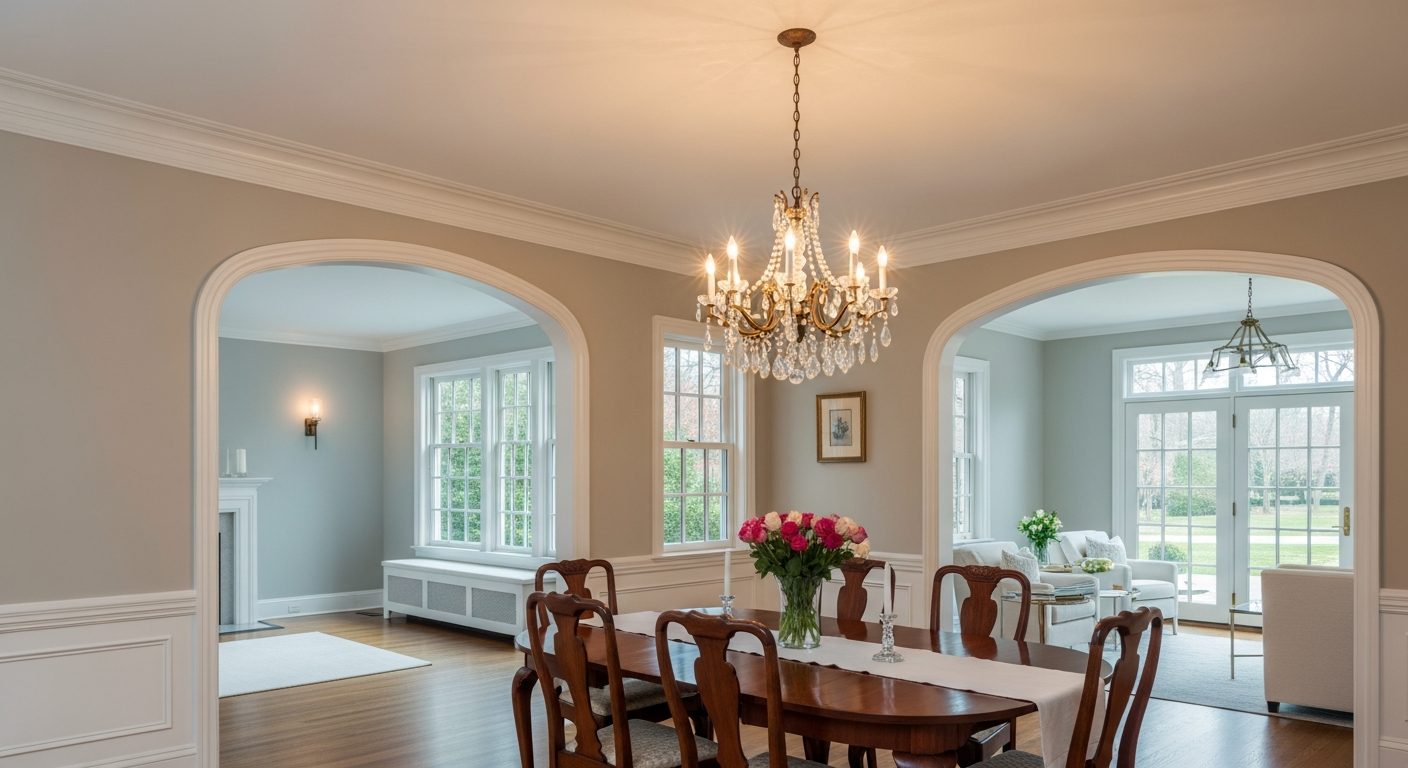
New Canaan’s other major housing style is traditional. Stately Colonials and Georgians, many built decades ago, feature formal rooms, crown molding, wainscoting, chair rails, built-in bookshelves, and layered trim work. These homes require precision too, but for different reasons.
Crown molding and wainscoting demand flawless cutting-in. Anything less looks sloppy. You need sharp lines where wall color meets trim. You need to know when to use a brush versus a roller, how to handle inside corners and butt joints, and how to avoid paint buildup at transitions. Many homeowners have watched contractors rush this work, creating a blurry edge that bothers them every day.
Built-in bookshelves add another layer of complexity. You’re cutting in around shelves, inside reveal edges, and shelving supports. Done well, it looks intentional and clean. Done quickly, it looks like you ran a roller around obstacles.
Formal dining rooms and living rooms with traditional finishes often benefit from richer colors-deep greens, warm grays, navy accents-which demand excellent coverage and consistency. Multiple coats might be needed, which adds time but ensures the color reads as you intended, not streaky or thin.
Color Selection in a Design-Forward Community
New Canaan homeowners typically have strong design instincts. They’ve looked at paint chips, consulted mood boards, and thought through how light changes a room at different times of day. What many underestimate is how much the underlying preparation affects how the final color actually appears.
Traditional homes in New Canaan often have multiple layers of old paint, occasional water damage, or plaster cracks beneath the surface. Painting over these without proper prep (skimming, patching, sanding) results in uneven new paint where color won’t read as intended. The prep work literally determines whether your chosen color looks like the sample or flat and mottled.
Mid-century modern homes require equally critical prep, but for visibility reasons. Any imperfection in the substrate (drywall, plaster, concrete if it’s a later home) will be visible in the finished paint, especially in natural light near those floor-to-ceiling windows. Sanding, patching, priming, and careful surface preparation aren’t optional-they’re the difference between a professional result and an amateur one.
Interior Painting Scope: Room by Room
Typical interior painting projects in New Canaan range from single rooms (master bedroom, dining room) to whole-house refreshes. Room size doesn’t indicate complexity. Small rooms with heavy trim work might take longer than large open spaces with minimal detail.
Master bedrooms with crown molding and wainscoting might require 2 to 3 days, depending on color, number of coats, and trim detail. Dining rooms with built-ins or living rooms with architectural interest typically need similar time. Whole-house interior painting (4,000 to 6,000 square feet) usually runs 3 to 4 weeks, accounting for prep, painting, and protecting finishes.
Occupancy status also affects timelines. Most New Canaan homeowners are living in their homes during painting, which means a good contractor works efficiently without disrupting your daily life, moves room by room so you’re not displaced from the entire house, and protects furnishings and flooring meticulously.
Protecting Historic and Modern Features
Whether your New Canaan home is a designated landmark mid-century modern masterpiece or a traditional colonial with original trim, the painting project needs to respect what makes the house valuable.
Mid-century homes require protecting original finishes (natural stained wood, stone, concrete) and extreme care with dust and overspray. A Breuer home with exposed stone or natural wood isn’t forgiving – one dust issue and you’re dealing with particles in finishes that won’t wash out.
Traditional homes need detailed masking of trim work, bookshelves, built-ins, and hardware. Understanding which trim stays the same color and which gets refreshed is essential. Careful attention to wall-to-trim transitions, crown molding joints, and corner work makes all the difference.
Both home types benefit from a contractor who’s done this specific work before. Understanding New Canaan’s architectural styles isn’t something you learn from a YouTube video-it comes from experience painting homes designed by known architects, homes listed on the National Register, and homes where the owners care deeply about precision and architectural integrity.
Choosing Your Painter in New Canaan
You need a painter, not just someone with a brush. New Canaan homeowners understand the difference. You’re looking for someone who can speak intelligently about finishes (matte, eggshell, semi-gloss), understands the relationship between color and prep work, and has completed projects in homes similar to yours.
Request photos of interior painting work in New Canaan or comparable Fairfield County towns. Examine crown molding, wainscoting, trim transitions, and how colors read in finished spaces. Ask the painter about their approach to prep work. The answer should be detailed and specific, not vague.
Check that they’re fully licensed and insured in Connecticut, and that they have a process for managing timelines, protecting your home during the project, and handling any prep issues that surface during the work. In a community like New Canaan where many homes have architectural significance, your painter should understand that precision and respect for the home’s character are non-negotiable.
Frequently Asked Questions
How often should you repaint interior walls in a high-end home?
Most homeowners repaint every 5 to 7 years if there’s heavy traffic or sun exposure. In a less-used formal dining room or sitting room, you might go 7 to 10 years. The quality of the initial paint job affects this timeline. Proper prep work, good paint, and correct finish application last longer than rushed work does.
What’s the difference between interior paint finishes, and does it matter in New Canaan homes?
Yes, it matters significantly. Matte finishes don’t reflect light (ideal for mid-century modern and minimalist interiors), eggshell offers slight sheen and is easier to clean, and semi-gloss is durable but reflects light (better for trim and in traditional formal rooms). The finish should align with the home’s architecture and the room’s function. A paint contractor should explain why they’re recommending a specific finish for your space.
Can you paint mid-century modern homes with the same approach as traditional homes?
No. Mid-century homes demand flawless prep because imperfections are visible in clean, minimal spaces and near large expanses of glass. Traditional homes require careful trim work because crown molding and wainscoting detail shows every brush stroke. The materials and finish specifications can be similar, but the execution approach is different.
Is it worth hiring a professional for interior painting, or can you DIY?
Interior painting in a home like a New Canaan Colonial or modern masterpiece is a skill. Prep work is 70 percent of the job, and it’s where most DIYers cut corners. Professional painters have equipment (scaffolding, lifts, sanders), experience with detail work, and the ability to protect your home and finishes. If you’re painting a formal living room with crown molding or a mid-century space where every imperfection shows, professional work is worth the investment.
How do you protect furniture and flooring during interior painting?
Proper masking and protection matter tremendously. A professional painter covers flooring with canvas drop cloths (plastic tears and allows moisture to trap underneath), masks trim and hardware carefully, and uses containment systems if needed. They should also discuss moving furniture and protecting valuable pieces. Some homeowners choose to empty rooms entirely for interior painting, which makes the job cleaner and faster.
Related reading
- color and precision in Darien interiors
- refined interior finishes for Greenwich homes
- how to pick the right paint finish
- painting work across New Canaan
