

Exterior Painting in Rye, NY: Protecting Your Home From Coastal Weather
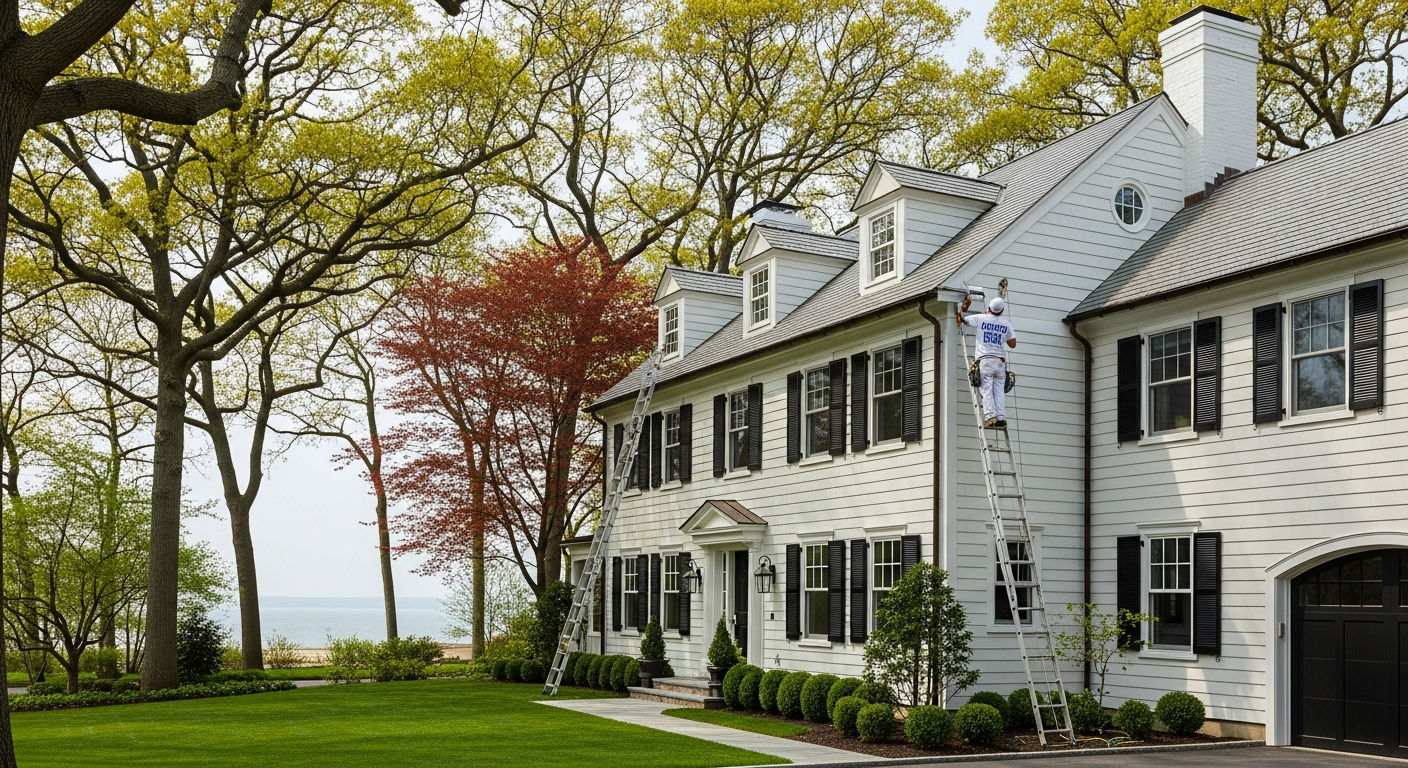
Rye’s Exterior Challenges: More Than Just Salt Air
Coastal weather in Rye creates a triple threat: salt air, moisture, and UV exposure. Salt spray from Long Island Sound travels inland farther than many homeowners realize, especially in developments near Playland and Rye Town Park. This salt doesn’t just add character to your afternoon walks. It accelerates corrosion on metal fixtures, causes paint to peel and blister, and creates a thin crust of mineral buildup on siding that traps moisture underneath.
Your home’s north-facing walls get another punishment. Rye’s mature tree canopy is beautiful, but it means certain sides of your house stay damp longer. Moisture lingers in shade, and so does mildew and algae. Paint that might last eight to ten years on a south-facing wall can fail in half that time on north-facing cedar shake or clapboard siding.
Then there’s the humidity. Even when it’s not raining, the air near the Sound is thick with moisture. Before paint goes on, that moisture has already soaked into your siding. Apply paint without proper prep, and you’re trapping water inside. The paint bubbles, peels, and fails within a couple of seasons. Every contractor in Rye who’s been around long enough has seen this cycle repeat.
Which Rye Homes Need Exterior Painting?
The residential architecture in Rye is diverse, and different styles need different approaches. Tudor homes from the 1920s and 1930s typically have stucco and half-timber facades. Stucco is porous, drinks up moisture, and needs paint that breathes. You can’t use a hard, glossy exterior enamel on stucco and expect it to last. You need a quality acrylic latex paint that allows vapor transmission but still seals out rain.
Center-hall Colonials, especially those on Forest Avenue and in Milton Point, usually have wood clapboard siding. This is classic New England construction, but it’s not maintenance-free. Wood clapboard wants to expand and contract with seasonal humidity changes. Paint that’s too rigid cracks. Paint that’s too flexible wears through before it’s time. The right product, applied over properly prepared wood, can last ten to twelve years in Rye’s climate.
Cedar shake roofs and siding are also common in older Rye neighborhoods. Cedar is naturally durable, but when left unfinished, it grays and weathers fast. Many homeowners paint or stain cedar shake to keep the color consistent and extend its life. The trick is choosing a formulation designed for shake and shingle, not just standard exterior house paint.
Newer construction might have fiber cement siding or vinyl. Fiber cement is low-maintenance compared to wood, but it still needs painter’s prep and quality paint to handle coastal weather. Vinyl typically doesn’t need paint, but when homeowners want to change color or refresh, it’s possible with the right product and surface prep.
The Right Paint for Rye’s Climate
Not all exterior paints are the same, and buying the cheapest option at a big-box store almost guarantees disappointment in Rye. You need paint that’s specifically formulated for coastal climates. That means paint with excellent mildew resistance, UV stability, and the right sheen and flexibility for your specific substrate.
In Rye, we typically specify 100% acrylic latex paints from premium manufacturers. These paints form a strong film, resist salt spray better than cheaper alternatives, and flex slightly as wood moves with humidity changes. They also clean up with water, which matters when you’re working in residential neighborhoods and don’t want to deal with harsh solvents.
Sheen matters more than most homeowners think. A high-gloss finish sounds durable, but on clapboard it can peel faster because it’s so rigid. A satin or soft-gloss sheen gives you durability with flexibility. On cedar shake, a matte finish often looks better and still protects. On stucco, a flat or matte finish mimics the original appearance.
Preparation: The Difference Between Paint That Lasts and Paint That Fails
Here’s what separates a paint job that lasts ten years from one that fails in three: what happens before the paint even goes on. In Rye’s humid climate, this is non-negotiable.
Pressure washing removes loose paint, dirt, algae, and salt deposits. But it has to be done carefully, especially on stucco or older clapboard, where too much pressure causes damage. We typically use lower PSI on delicate substrates and higher on stable surfaces like fiber cement.
Scraping and sanding remove all loose or peeling paint down to solid material. On homes with old lead paint, this step requires specific containment and disposal procedures to keep the work area safe. After scraping, we sand smooth, fill gaps or cracks with appropriate caulk or wood filler, and sand again.
Caulking is a big deal in coastal Rye homes. Every joint between clapboard boards, every gap where trim meets siding, and every area around windows and doors needs quality caulk. Moisture sneaks into these gaps and causes rot and interior damage. We use 100% silicone or polyurethane caulks rated for exterior use. These stay flexible and last longer than generic latex caulk.
Priming is the final prep step before paint. A quality primer seals stains, provides better adhesion for topcoat paint, and improves the overall durability of the finish. On new wood, cedar shake, or anywhere with stains or water damage, primer is mandatory. Skipping it’s how homeowners end up with paint failure a year or two later.
Spring and Summer: Your Rye Exterior Painting Window
Exterior painting in Rye has a practical timeline. The best months are May through October, when humidity is lower, temperatures are moderate, and rain is less frequent than in spring. Spring in Westchester can be wet, and fall can turn wet quickly. Summer weather is more predictable.
Temperature and humidity both matter. Paint doesn’t cure properly below 50 degrees Fahrenheit or above 85 degrees. Humidity above 85% also slows curing. If you’re painting in Rye in May, you might have a few warm, dry days followed by rain. This matters because timing is everything: professional contractors monitor the forecast to catch optimal windows, not just check a calendar date.
HOA considerations apply in some Rye developments. A few neighborhoods have architectural guidelines about exterior colors or finishes. If you’re in one of these communities, check the rules before committing to a specific color. Palette Pro can work with your HOA’s approved palette and find options that look great while staying compliant.
Choosing an Exterior Painting Contractor in Rye
You want someone who’s painted dozens of homes on your street, understands the specific challenges your house faces, and uses materials and methods proven to work in Rye’s climate. That contractor should walk your home, look at the current condition of the paint and siding, ask questions about previous work, and explain exactly what they’ll do and why.
Insurance and bonding matter. If something goes wrong during the project, you want to be protected. Ask about the contractor’s licensing and insurance. A reputable contractor has no problem providing proof.
Your contractor should also provide a written estimate that specifies what prep work will be done, what paint will be used, how many coats you’ll get, and when the work will start and finish. Vague estimates are red flags.
Frequently Asked Questions
How long should exterior paint last in Rye?
With proper prep and quality paint, you can expect seven to ten years in Rye’s coastal climate. Homes with excellent prep and high-end paint in favorable microclimates (good sun exposure, less salt spray) might stretch closer to twelve years. North-facing walls and areas near the Sound typically fail sooner due to salt air and shade.
Can I paint over existing exterior paint without scraping?
Not if the existing paint is peeling, blistering, or loose. Paint won’t adhere over loose material, and you’ll be back to square one within a couple of years. If the existing paint is sound and well-adhered, you can prime over it with good surface prep and the right primer. But if there’s any doubt, scrape and prime.
What’s the best color for an exterior in Rye?
That depends on your home’s style, lot characteristics, and personal preference. Light colors reflect heat and work well in full sun. Darker colors absorb heat and can be striking on the right home. Earthtones and neutrals are popular in Rye’s residential neighborhoods and tend to hold value. Ask your contractor for color consultation based on your home’s specific setting.
Do I need to prime before painting exterior wood?
Yes. Priming seals the wood, improves paint adhesion, and prevents tannins and water stains from bleeding through topcoat paint. This is especially important on cedar shake, new wood, or areas with prior water damage or staining. Skipping primer is one of the quickest ways to ensure paint failure.
Should I paint in spring or fall?
Late spring through early fall is safest (May-October). Spring weather in Rye is often wet, and humidity can be high. Fall turns wet quickly as well. Summer provides more stable conditions and more windows of good drying weather between rain events.
Ready to protect and refresh your Rye home? Palette Pro Painting & Renovation has earned 140+ five-star Google reviews from homeowners across Westchester and Fairfield counties. Call 1 (800) 687-9470 for a free estimate, or visit palette-pro.com to see our work.
Related reading
- exterior painting for Mamaroneck homes
- deck staining and pressure washing nearby
- reviving historic Rye interiors
- our Rye, NY project area
