


Interior Painting in Larchmont, NY: Refreshing the Village’s Classic Coastal Homes
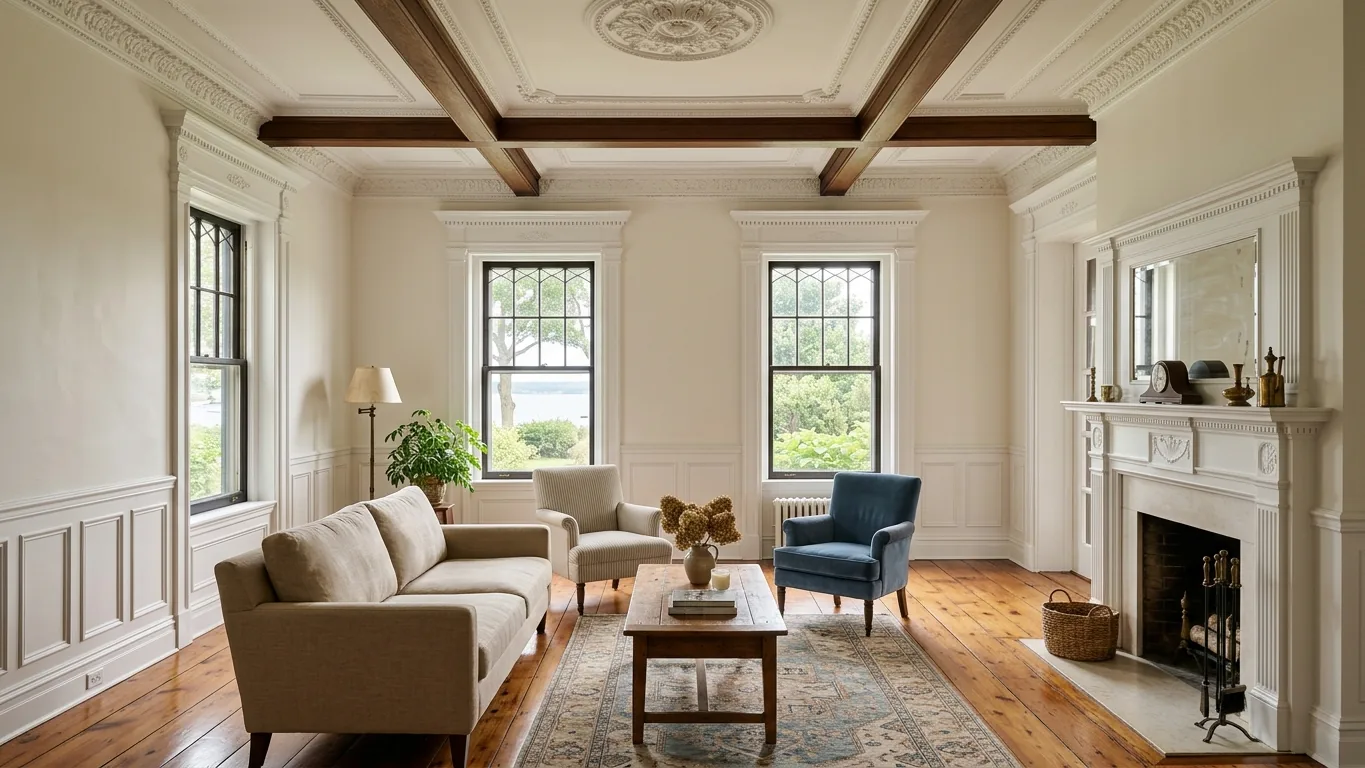
Larchmont occupies a small stretch of Westchester coastline between Mamaroneck and New Rochelle, and its housing stock reflects that position. The Manor section north of the Boston Post Road has some of Westchester’s finest Victorian and Colonial Revival homes, many built between 1890 and 1930 on generous lots overlooking the Sound. The village section south of the Post Road has a more compact mix of bungalows, Colonials, and Tudors from the early and mid-20th century. Both share the coastal conditions that shape how interior painting works here.
Larchmont Manor: What Interior Painting Involves Here
The Manor section has homes that are genuinely architectural. Original plaster walls a century old, coffered ceilings, elaborate millwork, window seat alcoves, and built-in cabinetry that requires careful, patient finish work. Interior painting here is not a standard repaint. It is restoration-adjacent work that demands the right prep, the right materials, and a crew that has done this kind of work before.
The main prep considerations in Manor homes: plaster that has been painted many times and may carry hairline cracks, water stains from historic leaks, and thick paint buildup on trim profiles that has obscured the original sharpness of the millwork. Addressing these before topcoat, filling cracks with flexible compound, stain-blocking with shellac primer, mechanically sanding trim, is what separates a paint job that lasts from one that shows its problems through the new finish.
Color choices in the Manor have to respect the proportions of these homes. Very large rooms with high ceilings can carry richer, deeper colors without feeling heavy. Off-whites and creamy tones in a library with twelve-foot ceilings feel expansive; the same color in a low-ceilinged suburban room can feel closed in. Farrow & Ball and Benjamin Moore both have strong period-appropriate palettes for this context.
Larchmont Village: The Bungalow and Colonial Interior
The village section has a different character. More compact homes, more modest proportions, but often the same original plaster surfaces and layered paint histories as the Manor homes, just at smaller scale. The requests here tend to be full-home refreshes, kitchen and bathroom updates, and the room-by-room modernisation that happens as homes change hands.
Coastal conditions affect the village homes too. Larchmont’s humidity from Long Island Sound means moisture-related paint problems are common maintenance issues: mildew in closets, peeling in bathrooms, efflorescence on below-grade walls. Identifying and addressing these before painting is part of the prep on any Larchmont interior.
Choosing Colors for Larchmont Interiors
Larchmont homeowners tend toward palettes that complement the coastal setting and the character of their homes. The Manor rewards traditional approaches: warm whites, soft greens, period-appropriate library greens and blues, and considered neutrals that do not compete with the architectural details they surround.
The village section has more latitude. Contemporary neutrals, soft blues and greens, and the range of warm whites that have become standard in Westchester residential painting all work. The key in any Larchmont interior is finish selection relative to surface condition. A flat finish on imperfect plaster reads more forgivingly than eggshell, which reflects enough light to highlight surface texture.
Color Consultation, and Why It Matters at Full Scale
Color selection is the decision homeowners most often want help with. The technical questions, what primer, what finish, what product, are answerable. The color question is personal and contextual in ways that make it harder to resolve from a small chip on a color wheel.
We offer color consultation as part of the estimate process. That means reviewing the existing materials in each room, the floors, the trim, the fixed furniture, discussing the feel you want in the space, identifying a short list of candidates per room, and providing large painted samples on the actual wall before you commit. Color looks different at full scale and in the specific light of your home than it does on a chip at the paint store, and we never recommend a final commitment from a small sample alone.
For Manor homes with complex architectural character, high ceilings, elaborate molding, multiple connected formal rooms, the conversation matters more. Colors in those spaces need to work with each other and with the architecture, not just look good individually.
Working Around Larchmont’s Calendar
Larchmont is a family-driven community, and the school year shapes when homeowners schedule interior work. The windows when families most want work done, summer, the holiday break, spring break, are the windows when demand for interior painting is highest. Booking four to six weeks ahead for summer projects, and two to three weeks for off-peak periods, is the realistic timeline here.
For homeowners who want minimal disruption to family life, autumn and early winter are actually the most practical windows. The school year is established, the family is in a routine, and the crew can work without the access challenges that summer schedules sometimes create.
What Drives the Estimate
Interior painting in Larchmont varies more than in most markets, because the housing stock varies so much. What moves the number:
Surface condition. This is the biggest single factor. Sound drywall is quick. Century-old plaster with crack repair, stain blocking, and consolidation is a different job entirely.
Room count and ceiling height. Manor homes with twelve-foot ceilings need staging and more material per room than a village Colonial.
Trim and millwork. Elaborate crown, chair rails, built-ins, and divided-light sash are hand work, and they take the time hand work takes.
Color change. Going dramatically lighter or darker means an extra coat, sometimes a full primer coat first.
Product specification. Farrow & Ball, Benjamin Moore Aura, and standard lines are different materials at different costs.
Every project receives an itemised estimate before work begins, after we have walked the rooms and seen the actual conditions.
Paint Maintenance Between Full Repaints
A full interior repaint in a Larchmont home is a significant investment, and with proper maintenance it holds up well. A few practices extend the life of the finish and keep touch-up needs minimal.
Clean walls gently. A damp microfibre cloth handles most marks without damaging the paint film. Avoid abrasive cleaners on painted surfaces, which remove sheen and leave dull spots. In kitchens, address grease before it builds into a film that needs harder scrubbing.
Keep touch-up paint from the original project labelled by room and stored somewhere cool and dry. Properly stored paint matches well for two to three years. Older stored paint may show color variation, since the wall has continued to cure and the stored paint has slightly oxidised.
At the four to five year mark, assess the high-traffic areas: entry halls, kitchen, bathrooms, children’s rooms. Spot repainting those while the rest of the home is still in good condition is easier than waiting for the whole house to need attention at once.
Frequently Asked Questions
How long does interior painting take in a Larchmont Manor home?
Manor homes with large room counts, high ceilings, and original plaster typically take 10 to 18 business days for a full-home interior project. The plaster prep, crack filling, stain blocking, trim sanding, adds time compared to newer construction. We provide a project-specific timeline at the estimate visit.
What does interior painting cost in Larchmont?
It depends on the size of the home, the surface conditions, the amount of trim and millwork, the extent of color change, and the product specified. Manor homes with significant plaster repair and stain-blocking work involve considerably more prep than a village Colonial. Every project receives an itemised estimate before work begins. Call 1 (800) 687-9470 or visit palette-pro.com.
What primer do you use on Larchmont plaster walls?
It depends on the wall condition. Sound plaster with no stains takes a bonding or PVA primer. Water stains require shellac-based primer, typically Zinsser BIN, before any topcoat. Soft or powdery plaster needs a penetrating consolidator primer. We assess each area individually.
What paint brands do you use for Larchmont interiors?
We work with Benjamin Moore, Sherwin-Williams, and Farrow & Ball. Farrow & Ball is popular in Manor homes for its period palette. Benjamin Moore Aura performs well in Larchmont’s coastal humidity. Product selection follows the surface type, the room’s use, and your palette preference.
Do coastal humidity conditions affect interior painting in Larchmont?
Yes. Coastal humidity affects prep requirements, since mildew on walls and in closets needs treating before painting rather than painting over. It also affects product selection, because primers and paints formulated for high-humidity environments last longer here than standard formulations.
Can you match an existing color?
Yes. We use a spectrophotometer to match existing colors from the wall or from a paint chip, and we bring approval samples before painting.
What finish works best on Manor plaster walls?
Flat or matte on living areas and bedrooms with imperfect plaster, because it reflects less light and shows surface texture less than eggshell. Eggshell works well on smoother plaster. Semi-gloss or satin on all trim and doors. We discuss finish at the estimate based on the specific wall conditions we see.
Ready to refresh your Larchmont home? Palette Pro Painting & Renovation has earned 140+ five-star Google reviews from homeowners across Westchester and Fairfield counties. Call 1 (800) 687-9470 for a free estimate, or visit palette-pro.com.
Related reading
- interior painting across New Rochelle neighborhoods
- protecting Mamaroneck exteriors from salt air
- reviving historic Rye homes with fresh finishes
- a look at our interior services
