


Exterior Painting in Irvington, NY: Fall Prep for Hudson River Victorian and Colonial Homes
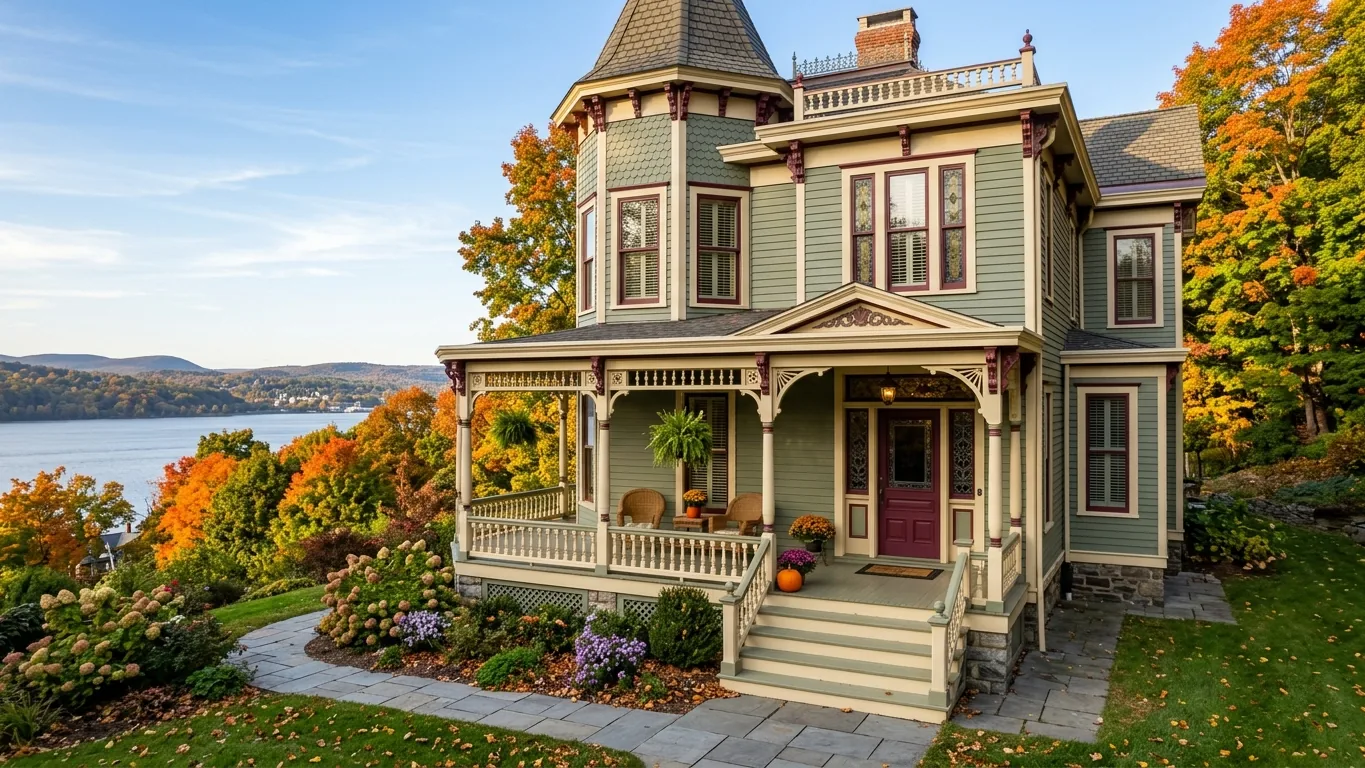
Irvington-on-Hudson has one of the most architecturally distinctive housing stocks in Westchester County. The village’s Victorian and Second Empire homes along North Broadway, its Craftsman bungalows, and its Colonial Revival estates overlooking the Hudson represent building traditions spanning the 1850s through the early 20th century. Exterior painting here is not routine maintenance. It is care for architectural history, and it demands attention to prep, detail, and material selection that general painting contractors do not always bring.
Autumn, specifically September through late October, is the ideal exterior window for Irvington. Summer humidity has dropped, temperatures are moderate, and conditions for application and cure are as good as they get in Westchester.
Why Autumn Is the Right Window
Exterior paint needs stable, moderate conditions to adhere and cure correctly. Westchester summers run hot and humid, which slows cure, raises moisture in wood substrates, and can cause paint to bubble or blister when temperature or humidity is too high. Spring here brings unreliable weather through May.
September and October offer the best combination: daytime temperatures typically in the 55 to 75 degree range, lower humidity than summer, and longer dry windows between rain events. Leaves stay on the trees through most of October, providing wind protection on exposed Hudson-facing properties. This is the window serious exterior contractors schedule for in advance.
Irvington’s Victorian and Second Empire Exteriors
The Victorian homes along North Broadway and the streets above the river present exterior painting challenges that are genuinely complex. Decorative millwork, turned porch columns, fish scale shingles in gable ends, carved vergeboard, and multi-level rooflines all create surfaces that require patient, precise preparation and application.
Prep on these homes matters more than on any other building type. Victorian millwork accumulates paint over a century or more of successive repaints. Where buildup has cost the decorative profile its sharpness, selective stripping or mechanical sanding restores the detail before new paint goes on. Cracked or deteriorating wood needs consolidation, epoxy filler, and primer before topcoat. Paint alone over damaged wood does not hold.
Color on these homes is a significant decision. The Queen Anne tradition uses multiple colors to highlight different architectural elements: body, trim, sash, shutters, and accent pieces each in a coordinated but distinct color. Done well, it is one of the most visually rewarding projects in residential painting. Done with colors that fight each other, it looks chaotic. We recommend starting from historical precedent and the character of the surrounding streetscape before settling the palette.
Colonial Revival and Craftsman Homes
Irvington’s Colonial Revival homes, many built in the early 20th century on the streets north and south of Main Street, are more straightforward than the Victorians but still require the care period construction demands. Original wood siding, wood trim, double-hung windows with divided lights, and painted shutters all need thorough prep.
The Craftsman bungalows, particularly near the train station, have exposed rafter tails, tapered porch columns, and wood shingle or clapboard siding that need cleaning, sanding, priming, and careful topcoat. The porch floor, a high-wear and high-moisture surface, needs deck paint rather than standard exterior paint.
Product Selection for Irvington Exteriors
On Irvington’s Victorian and Colonial Revival homes, the right exterior paint is 100 percent acrylic formulated for the specific substrate. For wood siding and trim, Sherwin-Williams Duration Exterior and Benjamin Moore Aura Exterior are the two products we recommend most consistently. Both are 100 percent acrylic, both carry strong warranties, and both have proven records on historic Westchester wood construction.
For decorative millwork with complex profiles, a penetrating oil-based primer under an acrylic topcoat gives better adhesion to bare or stripped wood than water-based primer alone. The longer dry time is worth it where topcoat adhesion is the primary concern.
For painted masonry on stone foundation walls, a masonry primer followed by an elastomeric or masonry acrylic topcoat is the right specification.
Protecting Irvington Exteriors Through Winter
The exterior painted in autumn is the last line of defence your home’s wood has against the winter ahead. A well-prepared and properly coated exterior handles freeze-thaw cycles, wet snow, and ice without significant damage to the film. An exterior with failing paint, peeling, checking, or lifting at seams, lets moisture into the wood over winter, which accelerates deterioration and makes the next repaint harder.
This is one of the strongest arguments for autumn work rather than waiting for spring. Paint applied in September or October has weeks of moderate weather to cure fully before the first hard freeze. Cured acrylic handles freeze-thaw well. Paint that has not fully cured when the first freeze arrives stays soft and vulnerable longer than it should.
If your home has areas of active failure going into winter, bare wood exposed to weather, peeling that lets moisture under the film, caulk failures at window frames or trim-to-siding joints, addressing those specific areas with spot primer and sealant is worth doing even if the full repaint waits for spring. Bare wood and open joints are the entry points. Closing them before winter reduces the damage that accumulates before the full project can begin.
Color and the Streetscape
Irvington’s position on the Hudson gave it early prominence as a retreat for New York’s merchant and cultural elite in the 19th century. The homes remaining from that era are community assets as much as private property. Their exterior colors are visible to neighbors, to visitors, and to anyone who cares about the character of the village.
That does not mean every homeowner must paint to a committee’s specification. It does mean color choices on historic exteriors carry a responsibility that suburban repaints do not. A Victorian in the Painted Lady tradition, with carefully chosen body, trim, sash, and accent colors in a historically informed palette, contributes to the street. A poorly chosen palette on the same home in a neighborhood of well-maintained period houses is impossible to ignore.
We take color consultation seriously on these projects for that reason. We research precedent for the specific home and style, present options at scale on the actual building, and help you make choices that work with the architecture and the street, not just what looks interesting on a chip.
What Drives the Estimate
Exterior projects in Irvington vary more than almost anywhere in Westchester, because the housing stock does. What moves the number:
Architectural complexity. A Victorian with decorative millwork, multiple rooflines, and a wraparound porch is a different job from a Colonial Revival with flat clapboard elevations.
Condition of the existing wood and paint. Sound paint that needs washing and spot prep is one thing. Widespread failure, paint buildup that has to come back, and wood consolidation or epoxy repair are another.
Number of colors. A multi-color Queen Anne scheme means more masking, more cut lines, and more separate operations than a two-color body-and-trim scheme.
Access and height. Staging for a three-storey Victorian on a sloped Hudson-facing lot is a real part of the job.
Product specification. Substrate-specific primers and premium acrylic topcoats cost more per gallon than builder-grade and last accordingly.
Every project receives an itemised estimate after we have walked the elevations and seen the actual condition of the wood.
Frequently Asked Questions
Why is autumn the best time for exterior painting in Irvington?
September through late October offers Westchester’s best combination of moderate temperatures, lower humidity than summer, and more reliable dry windows. Paint adheres and cures better in those conditions. We schedule Irvington exterior projects primarily in autumn and in the late May to mid-June spring window.
What does exterior painting cost in Irvington?
It depends on the size and architectural complexity of the home, the condition of the existing wood and paint, the number of colors in the scheme, access and staging requirements, and the products specified. Victorians with detailed millwork and significant prep involve considerably more labor than a straightforward Colonial Revival. Every project receives an itemised estimate. Call 1 (800) 687-9470 or visit palette-pro.com.
How do you handle the complex millwork on Victorian homes?
Decorative millwork requires patient, detailed prep. We assess each section for paint buildup, wood condition, and adhesion. Areas where buildup obscures the original profile are sanded or selectively stripped. Deteriorating wood is consolidated, filled with two-part epoxy where needed, and primed before topcoat. We do not paint over active wood deterioration.
How long does exterior painting take on an Irvington Victorian?
A full exterior on a large Victorian, including detailed millwork, multiple storeys, porch, and outbuilding, takes 10 to 20 business days depending on prep scope and the number of colors. A standard Colonial Revival runs 6 to 10 days. We provide a project-specific timeline at the estimate visit.
What products do you use on Irvington wood exteriors?
We specify 100 percent acrylic topcoats, Sherwin-Williams Duration Exterior or Benjamin Moore Aura Exterior. For bare or stripped millwork, a penetrating oil-based primer under the acrylic gives better adhesion. For masonry, masonry primer with an elastomeric or masonry acrylic topcoat.
Do you do color consultation for multi-color Victorian exteriors?
Yes, as part of the estimate process, including historical precedent research and sample application on the actual building so you can see the colors at scale before committing. On multi-color projects, where the wrong combination is immediately visible, this step matters.
Ready to prepare your Irvington home for autumn and winter? Palette Pro Painting & Renovation has earned 140+ five-star Google reviews from homeowners across Westchester and Fairfield counties. Call 1 (800) 687-9470 for a free estimate, or visit palette-pro.com.
Related reading
- what Victorian exteriors demand from a painter
- exterior painting near the water in Mamaroneck
- how to pick exterior house colors
- browse our painting and carpentry services
