


Deck Staining and Pressure Washing in Rye and Mamaroneck: End-of-Summer Prep
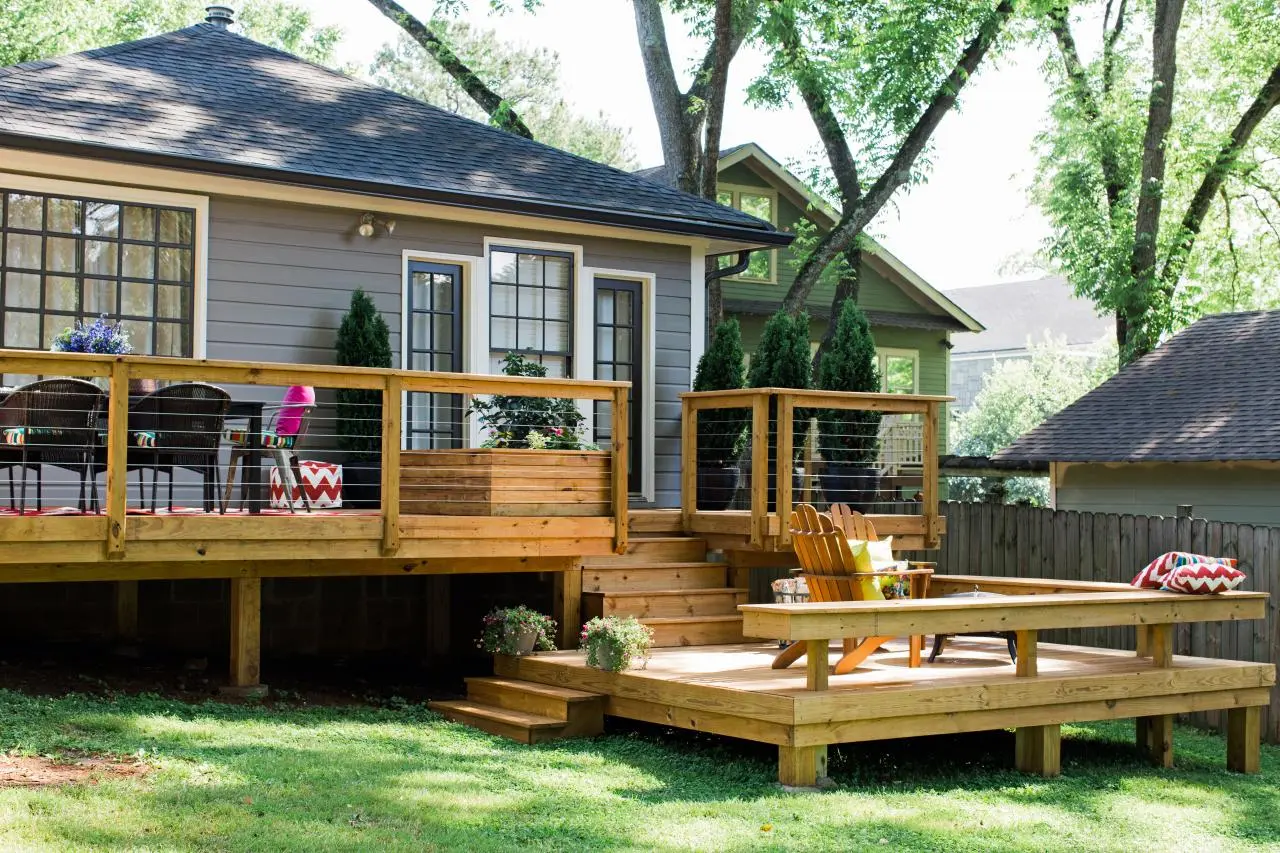
Your deck has been through a full summer. Sun, foot traffic, humidity, and salt air off the Sound all leave a mark. Gray boards. Mildew staining. Worn finish by the back door. A railing that gives a little when you lean on it.
Late summer is the right time to deal with all of it. Push the job to spring and the wood absorbs another winter of freeze-thaw cycles first. That’s one more season of moisture working against boards that are already tired.
Below is how proper deck staining works in coastal Westchester. We’ll cover the weather window, the difference between a rinse and real prep, and which products hold up along Long Island Sound.
Why Late Summer Is the Right Window
Deck staining needs dry, moderate weather. Wood has to be dry all the way through, and surface-dry isn’t the same thing. Stain that sits on damp fiber can’t bond, and it fails early.
Early summer here is usually too humid. Moisture content in the boards stays high, penetration drops off, and cure times stretch out. By late August the air moderates. Days stay warm enough for a good cure, humidity eases, and wood that has been drying in the sun all season finally settles.
September may be the best month of the year for deck work in Rye and Mamaroneck. Warm days, cool nights, and lower humidity suit both penetrating stains and film finishes. It’s also early enough to beat the first hard frost by a comfortable margin.
What Salt Air Does to a Coastal Westchester Deck
Decks near the Sound face conditions that inland Westchester decks never see. Salt air holds moisture against the boards and feeds mildew growth far more aggressively than dry inland air does. UV exposure on water-facing decks breaks down finish faster, and southern or western exposures take the worst of it.
Winter compounds the problem. Freeze-thaw cycles hit coastal decks harder because the wood enters the season already carrying more moisture. Water expands in the grain, the fiber loosens, and the surface opens up a little more each year.
So the maintenance interval shortens. Most well-kept decks in Rye and Mamaroneck need attention every two to three years. Comparable inland decks often stretch to three to five. Prep has to be thorough enough to pull off mildew, old finish residue, and gray oxidation before anything new goes down.
Pressure Washing Is Only the First Step
Plenty of homeowners assume a good pressure wash equals prep. It doesn’t. Washing removes surface dirt, loose mildew, algae, and some weathered fiber. Finish that has soaked into the wood stays put, gray oxidation below the surface stays put, and mildew at the root survives.
Real prep adds two chemical steps after the wash.
Deck Cleaner
Cleaner attacks the biological side of the problem. Mildew that survives a rinse grows back through fresh stain within a season, so the spores have to go before the product does. On heavily stained boards, a sodium hypochlorite or oxygen bleach solution before washing does more than water pressure alone ever will.
Deck Brightener
Brightener is an oxalic acid solution, and it reverses gray oxidation in weathered wood. Color comes back, the grain opens up, and stain penetrates the way it should. On a deck that’s been gray for two or three seasons, the change is dramatic.
Then the deck has to dry. In coastal conditions we wait at least 48 hours after washing, and longer when the week has been humid. Staining over wet wood is one of the most common reasons a job fails early.
Penetrating Stain or Film Finish?
Product choice comes down to what’s already on the deck and what condition the wood is in.
Penetrating stains, sold as semi-transparent or semi-solid, soak into the fiber instead of sitting on top. Grain stays visible. You get UV protection and water repellency, and old coats can usually be cleaned and recoated without stripping. Because there’s no film, there’s nothing to crack or peel when coastal wood swells and shrinks.
Film-forming products behave differently. Solid color stains, paints, and varnishes build a layer on the surface. Moisture eventually works underneath, and then the film lifts. In Rye and Mamaroneck that failure comes fast, and the prep needed to fix it is heavy.
For most decks around here, a penetrating semi-transparent or semi-solid stain is the right call. If a peeling film finish is already on the boards, it has to be stripped before new product goes on. Cleaning alone won’t do it.
Deck Staining vs. Deck Painting
The two words get used interchangeably in conversation, and they describe products that behave nothing alike.
Stain penetrates. Semi-transparent and semi-solid versions leave the grain visible to different degrees, while solid stain gives full color coverage and still soaks in. All of it moves with the wood through seasonal expansion and contraction, which is why properly applied stain fades rather than peels.
Paint builds a film. Color depth is excellent and the surface feels hard underfoot, but water finds its way under that film from below. Rain, condensation, and cleaning water all contribute. When paint fails on a deck it comes off in sheets, and the repair is far more work than a faded stain.
One exception exists. Some decks have been painted and repainted so many times that stripping to bare wood isn’t realistic. On those, a quality floor and deck paint is the practical choice.
Railings, Balusters, and Hardware
Railings in Rye and Mamaroneck are often composite, aluminum, or painted wood, and each takes a different approach. Composite and aluminum won’t accept penetrating stain. Cleaning is usually enough, with paint over the right primer when a color change is wanted.
Salt air speeds up oxidation on aluminum and rust on steel fasteners. A hardware check during deck maintenance is worth the fifteen minutes.
Wood railings and balusters take the same prep and product as the deck floor. They also get more hand contact than the boards do. Cap rails and railing tops wear faster, so they need extra prep attention.
What Cleaning and Brightening Actually Change
Gray wood isn’t permanently gray. Oxidation is a surface condition. UV breaks down lignin, the natural binder that gives fresh lumber its golden-brown color. Oxalic acid neutralizes that oxidation and brings the original tone back.
Washing handles the biological material first: mildew, algae, and ground-in dirt. Brightening then restores the color and opens the grain. Clean, brighten, dry, stain. Homeowners who’ve been looking at a faded deck all summer often don’t recognize the space afterward.
Keeping Your Deck in Shape Between Treatments
A few habits stretch the life of the finish. Sweep leaves and debris off regularly, because organic material traps moisture against the boards and speeds up mildew. Wipe up spills when they happen. After the leaves come down in late fall, sweep the deck fully and rinse it with a hose. Nothing should sit on the boards all winter.
Check for mildew each spring. Spot-treating a small patch with diluted bleach before it spreads keeps the next full prep manageable. Catching it early, before it grows into the fiber, makes a real difference in how much work the deck needs later.
Frequently Asked Questions
How often should I stain my deck in Rye or Mamaroneck?
Plan on every two to three years with a penetrating semi-transparent or semi-solid stain. Decks in full sun or close to the water often need it closer to the two-year mark. A water-drop test tells you where you stand. If water beads up, the finish is still working. If it soaks in, it’s time.
Can you stain a deck right after pressure washing it?
No. The wood has to dry through its depth, and a surface that feels dry to the touch can still be wet underneath. We wait a minimum of 48 to 72 hours in coastal Westchester, and longer after a humid stretch. Residual moisture is one of the top causes of premature stain failure.
What is deck brightener and do I need it?
Brightener is an oxalic acid solution that reverses gray oxidation in weathered wood. It restores natural color and opens the grain so stain penetrates properly. On decks that have gone gray, the visible difference is significant. We use it on most Rye and Mamaroneck decks that have weathered two or more seasons.
Should I use penetrating stain or solid color stain?
For most coastal Westchester decks, we recommend penetrating semi-transparent or semi-solid stain. It absorbs into the wood, shows the grain, and won’t peel when moisture moves through the boards. Solid color products form a film that can lift once water works underneath. Penetrating stain simply lasts longer here.
How much does deck staining cost in Rye or Mamaroneck?
What a project costs comes down to deck size, the prep it needs, and the stain you specify. Deck size drives the number. Prep work, washing, chemical treatment, and the stain you specify move it up or down. Heavy mildew, peeling finish that needs stripping, or damaged boards push a project toward the high end. You get an itemized estimate before any work starts.
Do you handle deck repairs before staining?
Yes. During the estimate we look at loose boards, cracked or splintered sections, failing fasteners, and anything structural. Minor repairs are part of the project: replacing boards, re-securing railings, swapping out damaged decking. Larger structural issues get flagged clearly, and we talk through the right approach before work begins.
How long does the whole process take?
Figure three to five days from start to finish. Most of that is waiting: drying after the wash, letting the brightener work, and letting each coat set before anyone walks on it. Active labor on a typical deck runs one to two days.
Ready to get your Rye or Mamaroneck deck ready for fall? Palette Pro Painting & Renovation has earned 140+ five-star Google reviews from homeowners across Westchester and Fairfield counties. Call 1 (800) 687-9470 for a free estimate, or visit palette-pro.com.
Related reading
- answers to common deck refinishing questions
- how often decks need sealing and staining
- lasting exterior finishes for waterfront Mamaroneck homes
- the services we bring to Rye, NY
